
Business parking lots across Marion County are starting to look different. Drive past hotels in Ocala, retail centers in Belleview, office parks near Silver Springs, or apartment complexes around Dunnellon, and you’ll spot rows of EV stalls where regular parking used to sit. Property managers and business owners are catching on fast, and the question we hear most often is how to add charging that pulls customers in without blowing the operating budget. That’s where dependable commercial EV charging stations services in Marion County earn their keep, and where the team at Altech Electric of Central Florida, Inc has guided plenty of local properties through the process.
So what does a commercial install really involve? Far more than the residential version. You’re looking at three-phase power, networked payment systems, ADA-compliant stall layouts, utility coordination with Duke Energy or Ocala Electric Utility, and permitting through Marion County Building Department. In this guide, we’ll walk you through the charger options for businesses, how the install actually rolls out on site, what shapes the final budget, and how to pick contractors who deliver clean work that lasts. Ready to see what a smart rollout looks like?
Why Marion County businesses are adding EV stalls
Foot traffic patterns have shifted faster than most property owners expected. Hotels along I-75, shopping plazas near Paddock Mall, and workplaces around the Florida Horse Park now compete partly on charger availability. According to the U.S. Department of Energy (2024), the number of public and workplace Level 2 ports in Florida grew by more than 30% year-over-year, and central counties like Marion are catching up to coastal ones in installations.
Customer dwell time is another big driver. A driver who plugs in at your retail center stays an average of 50 minutes longer than a non-EV customer, according to a 2023 Plug In America study. That extra time turns into food orders, retail purchases, and return visits. So commercial EV charging stations services in Marion County aren’t just about sustainability, they’re about revenue per square foot.
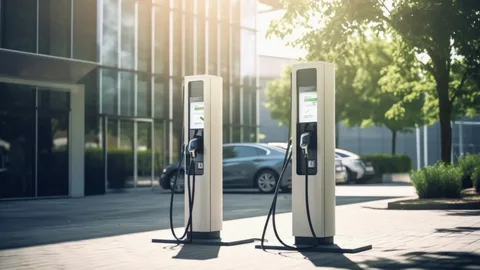
Then there’s the workforce angle. Companies with EV stalls in their employee lots report easier recruiting for tech and engineering roles, especially around the SR 200 corridor where new businesses keep opening. Smart EV charger contractors in Marion County will help you size the install for both today’s drivers and tomorrow’s growth.
Station types, power levels, and what fits your property
Choosing the right station mix depends on three things: how long drivers stay, how much grid power you can pull, and your budget for ongoing operating costs. Get the match right and your stations pay back. Get it wrong and you’ll have idle chargers or constant queue complaints.
Level 2 networked stations run on 208 to 240-volt three-phase power and add 25 to 40 miles of range per hour. They suit hotels, workplaces, gyms, and multifamily housing where drivers park for an hour or more. DC Fast Charging units run on 480-volt three-phase service and add 100 to 200 miles in 20 to 30 minutes, which suits highway-adjacent properties, convenience stores, and travel centers along I-75 and US-301.
Major brands in commercial deployments include ChargePoint, Blink, EVgo, Electrify America, ABB, and Wallbox Supernova. A licensed master electrician working across central Florida recently noted that mixed-tier installs, with two DC Fast units and four to six Level 2 units, now make up most new commercial rollouts in Marion and Alachua counties.
| Station Tier | Power Range | Best For | Driver Dwell Time |
| Level 2 Networked | 7–11 kW | Hotels, offices, gyms, multifamily | 1–8 hours |
| Level 2 High-Output | 19 kW | Workplace fleets, premium retail | 1–4 hours |
| DC Fast Charging (50 kW) | 50 kW | Shopping centers, restaurants | 30–60 min |
| Ultra-Fast DC (150–350 kW) | 150–350 kW | Travel plazas, highway stops | 15–30 min |
How a commercial install actually runs
A solid commercial rollout follows a predictable pattern, and skipping steps is where most failed projects come unstuck. Quality commercial EV charging stations services in Marion County run through every stage carefully. So what should you expect from kickoff to commissioning?
Site assessment and utility coordination
The first move is a full electrical site survey. Your contractor checks transformer capacity, available service amperage, and the distance from the utility connection point to each proposed stall. For DC Fast Charging, you’ll likely need a new utility service drop or transformer upgrade, which means coordinating directly with Duke Energy or Ocala Electric Utility well before any digging starts.
Load studies come next. These confirm whether your existing service supports the planned stations or whether you need a service upgrade. Older commercial buildings around downtown Ocala often run on undersized panels that can’t handle 480-volt DC equipment without major upgrades.
Permitting, trenching, and equipment install
After the load study, your contractor pulls permits through the Marion County Building Department under the 2023 Florida Building Code, which covers EV charging infrastructure under Section 625 of the National Electrical Code. Then comes trenching for underground conduit, pouring concrete bollards for stall protection, mounting the chargers, wiring the panels, and installing payment hardware. Final commissioning includes network activation, payment system testing, and ADA compliance verification before the county inspector signs off.
What shapes your total project budget
Budget swings on commercial work are wider than most property owners realize, and the chargers themselves usually account for less than half the total. Reliable commercial EV charging stations services in Marion County break every line item out clearly so you see where the money goes. Want to know the four biggest drivers?
Site civil work tops the list. Trenching across asphalt, cutting concrete, restoring landscaping, and adding ADA-compliant signage and bollards adds up fast. A station that’s twenty feet from the panel costs far less to install than one across the parking lot from your service room. Then there’s utility infrastructure. New transformers, service upgrades, and switchgear for DC Fast Charging can take months to schedule with the utility, and the costs sit on your tab unless grants offset them.
Permits, network subscriptions, payment system fees, and ongoing maintenance contracts round out the operating side. The Edison Electric Institute (2023) reported that commercial EV charging projects across the Southeast vary widely in total project cost based on these four factors, which matches what we see across Marion County rollouts. Grants from the Florida Department of Transportation and federal NEVI funding can offset significant portions for qualifying corridor projects along I-75.
How to pick the right local installer
Picking the right contractor matters more on commercial work than on any other electrical job. A bad install creates liability exposure, voids warranties on expensive networked equipment, and forces costly repairs once you’re already serving customers. So how do you separate real commercial EV specialists from electricians who’ve only done a few residential installs?
Start with state licensing and commercial bonding. Every electrical contractor in Florida must hold an active certification through the Department of Business and Professional Regulation, and commercial work requires higher bond limits than residential. Then ask how many commercial sites the company has commissioned in the past two years. Volume on commercial work indicates they understand network commissioning, payment integration, and utility coordination.
A specialist who handles commercial EV charging stations services in Marion County regularly, like Altech Electric of Central Florida, Inc, will already know the Marion County Building Department permit process, understand which charger networks integrate cleanly with hotel and retail management software, and carry the higher commercial general liability coverage that residential-only electricians often skip. That difference matters when something goes wrong at 11pm and your stations are down.
Watch for warning signs in proposals. Vague scope documents, no mention of utility coordination timelines, missing ADA compliance details, undersized service calculations, and aggressive upfront deposits all point to trouble. Professional EV charger contractors in Marion County deliver itemized scopes, named project managers, and clear warranty terms in writing before any work begins.
Conclusion
If you want to attract customers and employees, as well as increase your Marion County property’s value, commercial EV charging is one of the smartest long-term moves you can make. If you get the right station mix things will bring the drivers in and keep them on site longer and put your business on the map for the decade of vehicle electrification. A well-done installation involves dozens of moving parts, from load studies and utility coordination to permits, trenching, network commissioning, and ADA compliance.
You can contact Altech Electric of Central Florida, Inc when you are ready to proceed for a free site assessment. We will assess your electric service, review studio options that match your traffic pattern, and provide you with a written, itemized plan with realistic timelines. We give you the information you need so you can implement charging with no pressure. No upselling.
FAQ’s
How long does it take to install electric vehicle charging stations in Marion County?
Most level two commercial jobs take four to eight weeks to complete from survey to commissioning. A typical DC Fast Charging project takes 3-6 months as utility transformer upgrades and switchgear orders run on long lead times.
Will I require a permit for commercial EV charging stations services at Marion County, FL?
Yup. According to 2023 Florida Building Code and Section 625 of the National Electrical Code, all EV charging installations for commercial use must be by permit. The licensed contractor you employ secures permits from the Marion County Building Department and sets up inspections at trenching, rough-in, and final commissioning.
Will charging hardware for electric vehicles survive the Florida heat and storms?
NEMA 4 or NEMA 4X-rated outdoor commercial units cope with Florida heat, humidity and rain when installed under canopies or pole-mount covers. Inland Marion County is less affected by salt-air corrosion than coastal areas, but lightning protection and surge suppression should always be included.
What influences the overall project price of EV charger contractors in Marion County?
The final budget is affected by factors like trenching distance, utility service upgrades, transformer needs, station tier mix, payment network subscriptions, ADA work, and concrete bollards. The cost of DC Fast Charging projects is significantly greater than Level 2 as they need three-phase 480-volt service and special switching equipment.
Are there any EV charging grants or rebates for my Marion County business?
Most certainly many programs apply. The federal NEVI funding includes stations along exits on the I-75 corridor. The Florida Department of Transportation grants cover qualifying public-access projects. Utility incentives through Duke Energy may cover part of the cost for infrastructure.
Most level two commercial jobs take four to eight weeks to complete from survey to commissioning. A typical DC Fast Charging project takes 3-6 months as utility transformer upgrades and switchgear orders run on long lead times.
Yup. According to 2023 Florida Building Code and Section 625 of the National Electrical Code, all EV charging installations for commercial use must be by permit. The licensed contractor you employ secures permits from the Marion County Building Department and sets up inspections at trenching, rough-in, and final commissioning.
NEMA 4 or NEMA 4X-rated outdoor commercial units cope with Florida heat, humidity and rain when installed under canopies or pole-mount covers. Inland Marion County is less affected by salt-air corrosion than coastal areas, but lightning protection and surge suppression should always be included.
The final budget is affected by factors like trenching distance, utility service upgrades, transformer needs, station tier mix, payment network subscriptions, ADA work, and concrete bollards. The cost of DC Fast Charging projects is significantly greater than Level 2 as they need three-phase 480-volt service and special switching equipment.
Most certainly many programs apply. The federal NEVI funding includes stations along exits on the I-75 corridor. The Florida Department of Transportation grants cover qualifying public-access projects. Utility incentives through Duke Energy may cover part of the cost for infrastructure.